Author: Kyle Plesa

Social Media Marketing

The Art of Trash Talking – Pro Sports’ Social Media Teams

December 29, 2020

from ESPN…

What’s snarky, self-deprecating and smack-talking all at once? Well, your favorite team’s social media accounts, of course.

It’s a fine line that social media accounts have to walk, especially in 2020/2021, but when they do it correctly, it makes internet magic. And in a year when sports fans have had to find a new way to love their teams from afar, it makes sense that account managers have had to dig into the depths of their creative brains to connect with their fans.

And, with bowl season underway, the College Football Playoff on Friday, the NFL entering its final week of the regular season and the NBA into its second week of its season, it’s peak time for the team social media accounts.

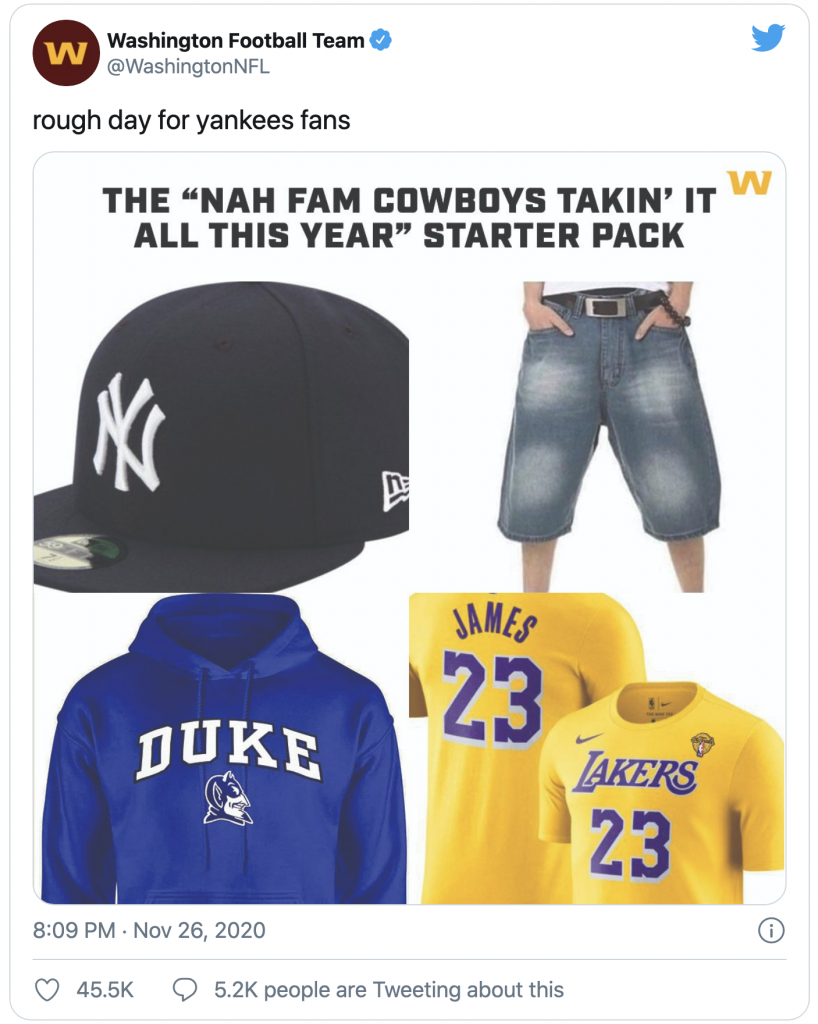
“You know, I think, one of the most important things we do is just read the room. In our case, our room is millions of followers and a fan base and also what’s going on in the world,” Rael Enteen, senior director of social media for the Washington Football Team, told ESPN. More than 1.2 million people follow the team on Twitter. Plus 900,000 on Instagram.

“So the best thing we can do is be reactive… you know, really think through everything and not make rash decisions,” he explained.

He and Astasia Williams, the team’s senior social media manager, have had wins left and right during the 2020-21 NFL season. They could, with another win in Week 17 against the Philadelphia Eagles, be taking their show into the playoffs.
The Art of Trash Talking - Pro Sports' Social Media Teams | The Social Group | Social Media Agency

They are one of the many examples among pro and college sports teams creating a voice and personality with their social media accounts.

Finding your voice

Williams joined the Washington Football Team in February 2020, a few months after Ron Rivera was hired and a few weeks before Ohio State’s Chase Young was drafted at No. 2 in the NFL draft.

Since then, Washington’s voice across social media has completely changed, focusing on speaking to and representing residents in the DMV (that’s District of Columbia, Maryland and Virginia for those who don’t know — but if you follow the team’s accounts, you know) who have been fans of the team through losses and off-field turmoil.

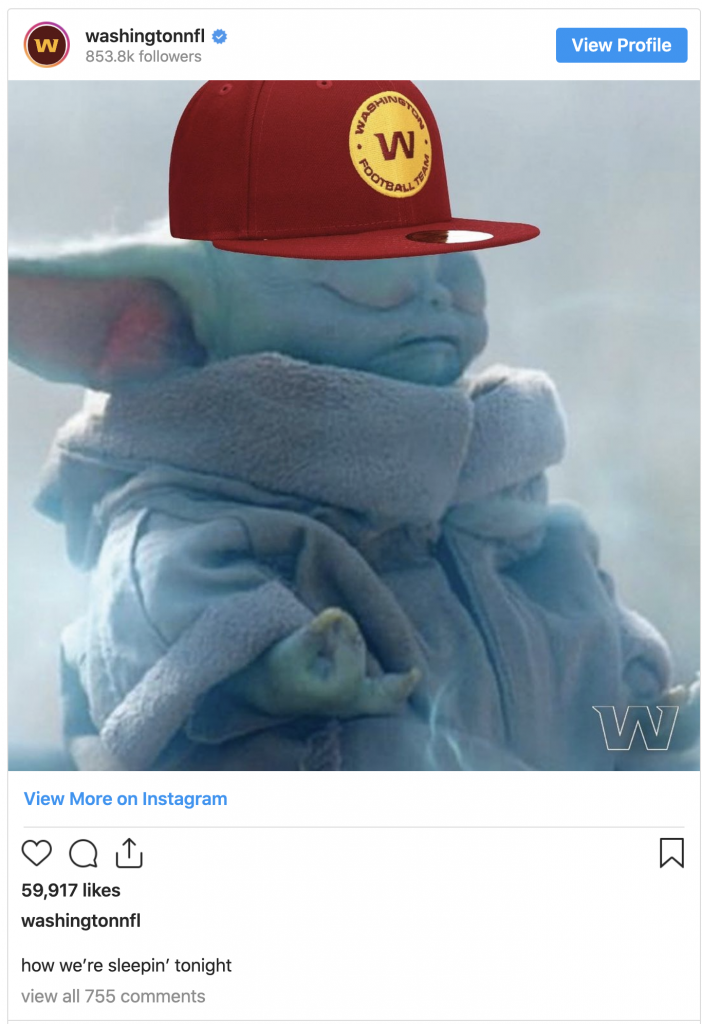
“We have all this new era stuff coming up — we want to match our social voice to that,” Williams said. “And so we did this tonality test in the beginning and we were trying out different slang, different words, talking with fans and engaging with them in the comments and replies to catch the vibes of where our fans were. And we just kind of took the results from that and we went along with it.”
Finding your voice - Pro Sports' Social Media Teams | The Social Group | Social Media Agency

Compared with last year, Williams said the team is all-in on having fun, making pop culture references, talking about music and fashion, and making sure the players are known for more than just what they do on the field.

“That’s what we want to continue to do,” Williams said. “And that’s what we want to do as we continue to grow our brand.”

So while Enteen and Williams had a brand they had to mold, Alyssa Girardi and Gordon Weigers had a different job to do: build a new brand.

Founded as an expansion team, the Vegas Golden Knights began playing just three seasons ago, in the 2017-18 NHL season. Interacting and engaging with fans who are likely new hockey fans while living in Las Vegas is something the team has been consistently focused on since its inception.

“So in the first season, that was a huge emphasis for us just because we were coming to a city, not knowing what the base knowledge of the sport was. That we were bringing your sport to a new city that did not have [an] established NHL team before,” Girardi, senior manager of communications and content, told ESPN.

Pop culture, they have realized, has been a big win on their social channels since they burst into the Twitter spotlight in 2017 — which means referencing favorite TV shows old and new whenever possible.
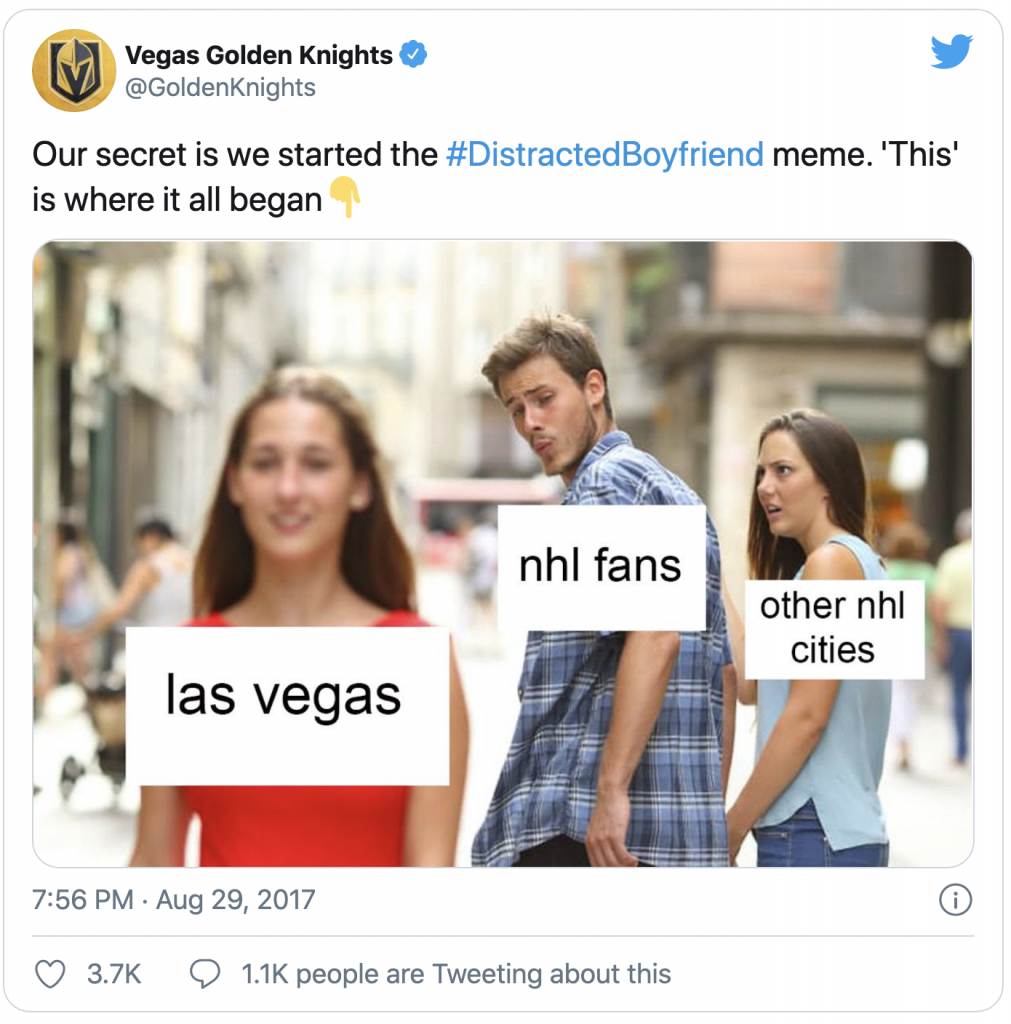
In December 2018, the Knights were quick to welcome Seattle as a new expansion team and the Knights’ account was finally able to press “send” on a favorite tweet that had been sitting in the drafts.
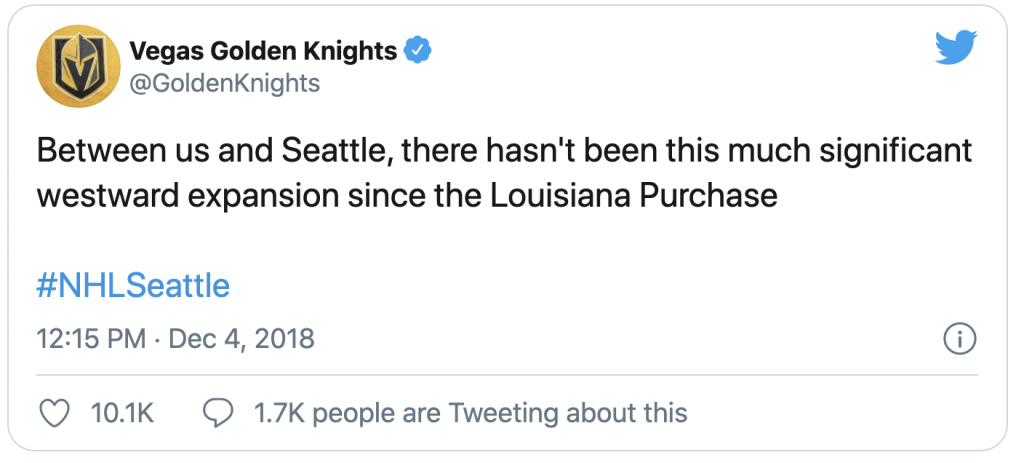
One specific reply defines why social media is so important to the team: A history teacher, not a hockey fan, tweeted back at the team calling it one of the best things on the internet lately.

Making friends…

In 2018, the Golden Knights’ social media accounts met a friend — the UMBC Retrievers. The two accounts bonded over being underdogs — and over real dogs, because, duh, this is the Internet — during March Madness.

During that spring’s NCAA tournament, UMBC became the first No. 16 seed to beat a No. 1 seed, the Virginia Cavaliers, in the tournament. During the game, the team’s Twitter account became a place to challenge haters, acknowledge history and then absolutely revel in the moment.
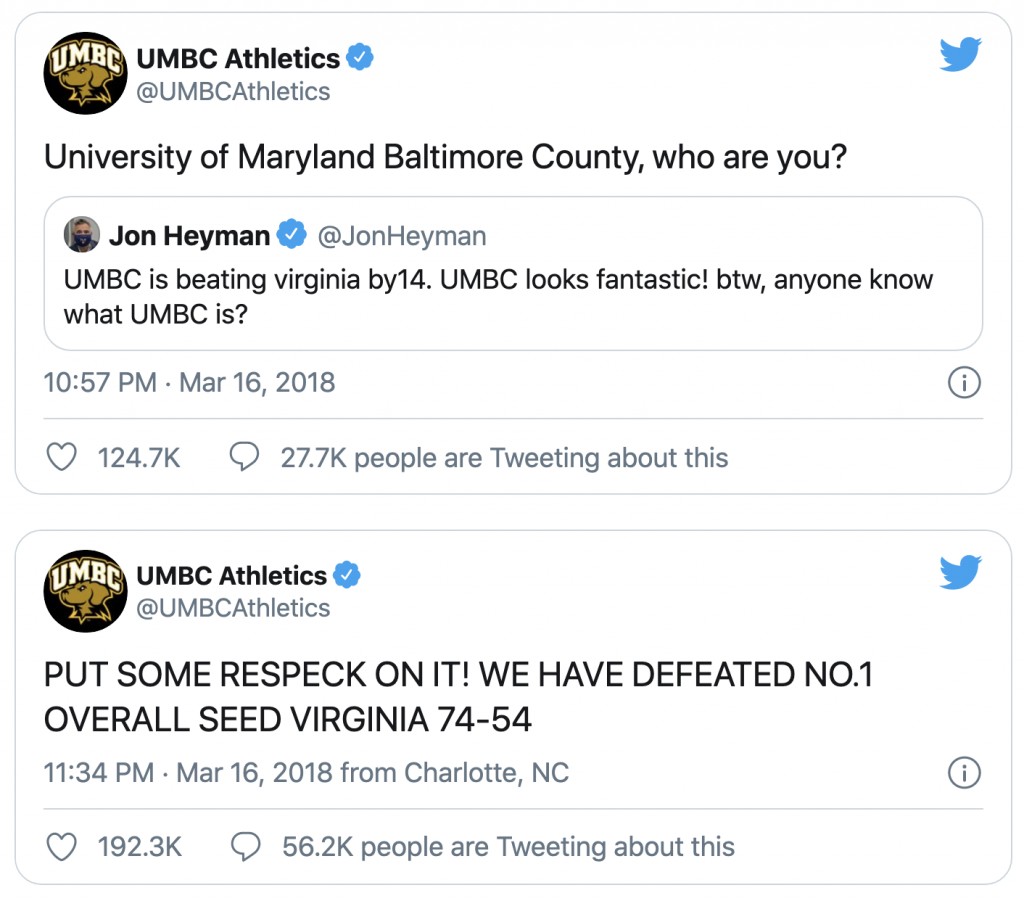
Making Friends: The Art of Trash Talking - Pro Sports' Social Media Teams | The Social Group | Social Media Agency

A month later, the Golden Knights had just clinched the Pacific Division, on their way to the Stanley Cup Final, surprising the NHL world and becoming BFFs with a fellow underdog team in a totally different sport.
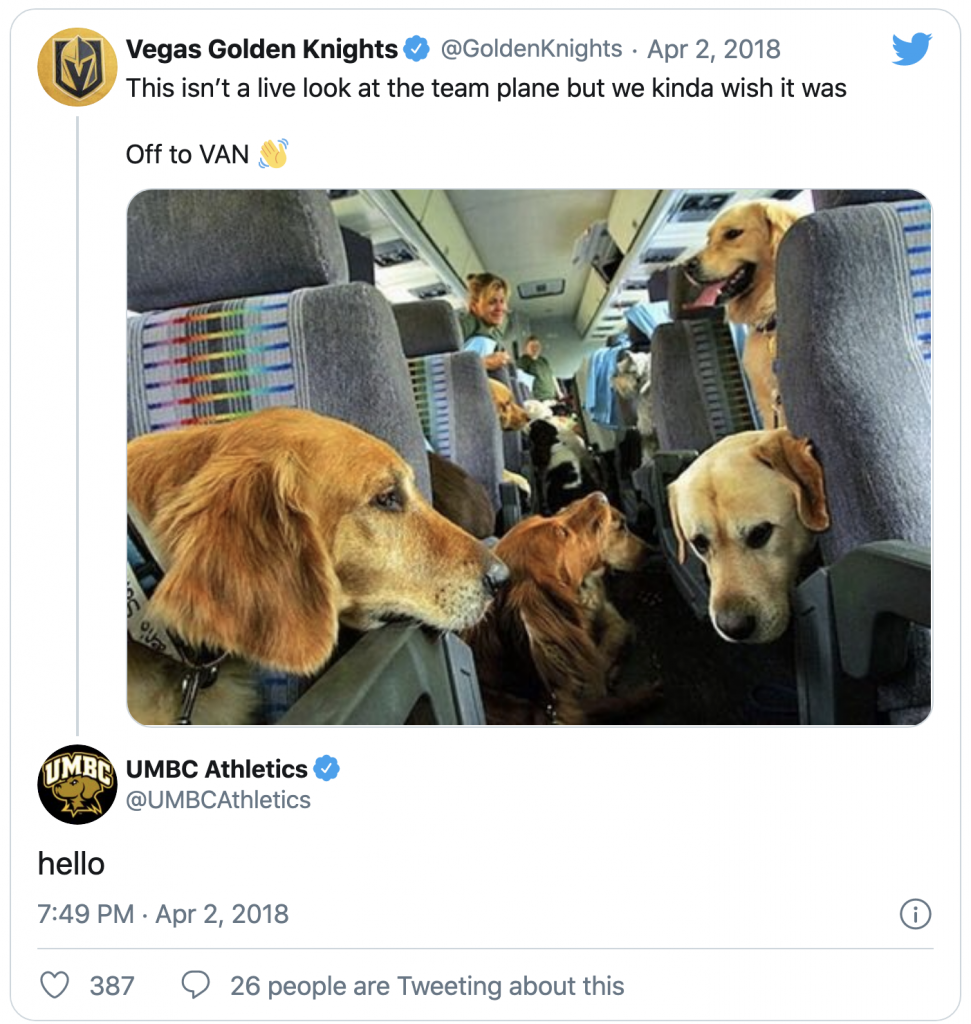
Since going viral in 2018 with his tweets, Zach Seidel is still in charge of UMBC’s social media — Twitter, Instagram and Facebook. He’s still having fun, still showing personality.

“… It’s important to show that you’re not, you know, just robots,” Seidel said. “I do think there’s a fine line between being mean to the other team and having some fun. But I do think it’s a great thing because, you know, now you see all the kids with social media, posting fun stuff about it, and I really think it’s great that it’s really showing the fun side of it and the personalities of it.”

… And enemies

Sure, there’s a lot of fun. However, some teams don’t get along in real life and won’t on social media either. The year-round smack talk that defines rivalries carries over to teams’ digital avatars.

When the 2019 NFL schedule was released, the Atlanta Falcons used their video to take a shot at their rivals, the New Orleans Saints. The previous season, the Saints lost in the NFC Championship Game to the Los Angeles Rams after a seemingly obvious pass interference penalty was not called.

Watch for the ram to gallop in and take out the band member.

And when former Falcons receiver Roddy White tweeted his criticism about Saints coach Sean Payton playing Taysom Hill at QB this season, Payton was quick to respond.
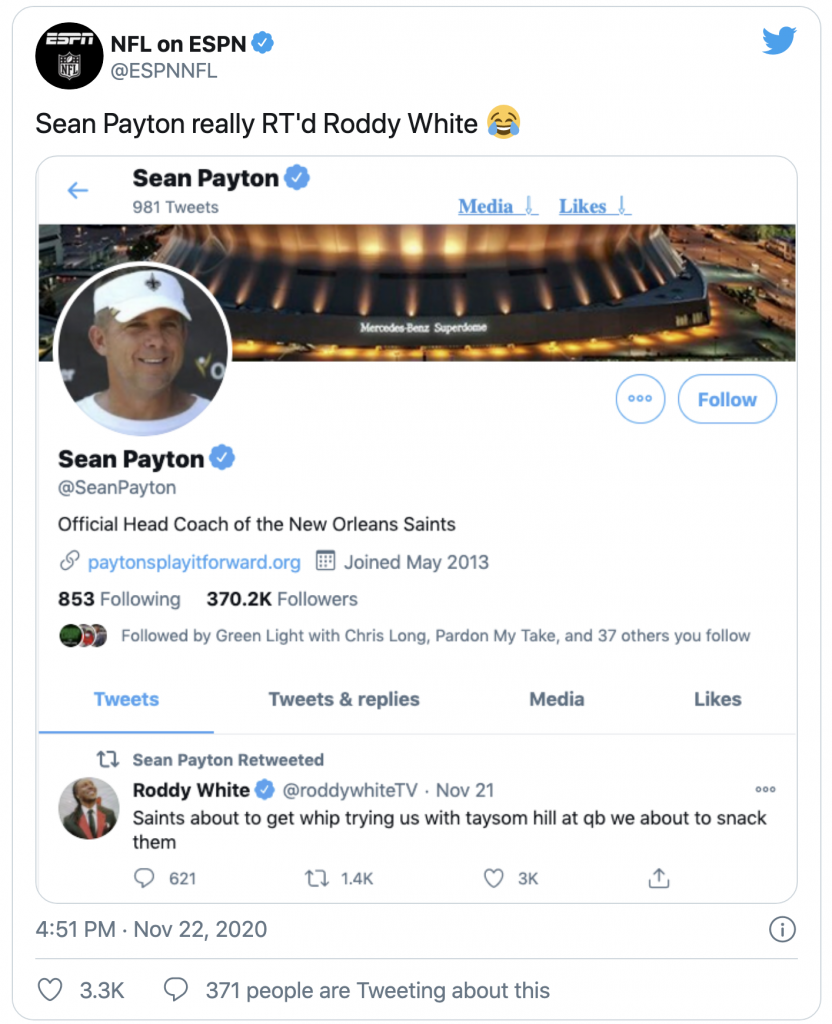
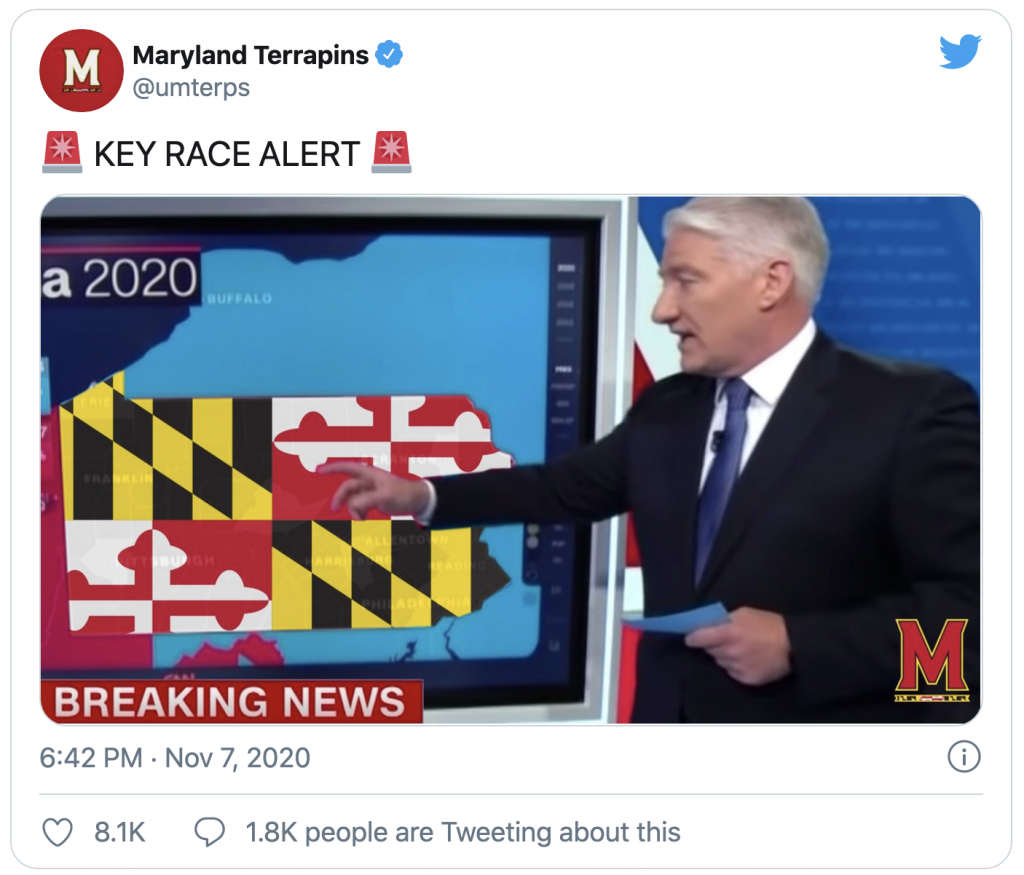
But the NFC South rivals weren’t the only ones spilling their beefs all over social media. Big Ten football was particularly snarky this season.

Maryland took shots at Penn State:
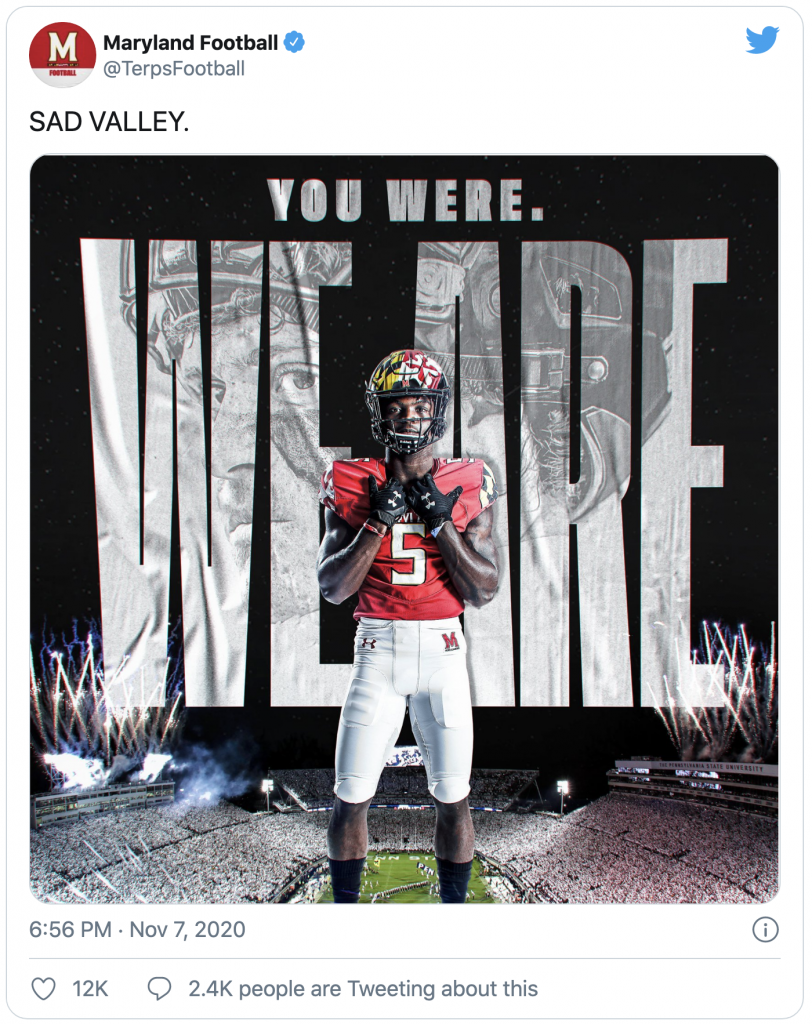
Rivalries: The Art of Trash Talking - Pro Sports' Social Media Teams | The Social Group | Social Media Agency

Friends and Rivals: The Art of Trash Talking - Pro Sports' Social Media Teams | The Social Group | Social Media Agency

Then, after Illinois defeated Nebraska, the team’s account tweeted, “Good game Nebraska. Thanks for bringing back B1G football.”

Nebraska was one of three Big Ten teams that voted against a league proposal to cancel the season during the coronavirus pandemic and then was one of the most vocal advocates to restart the season. Illinois eventually deleted the tweet.

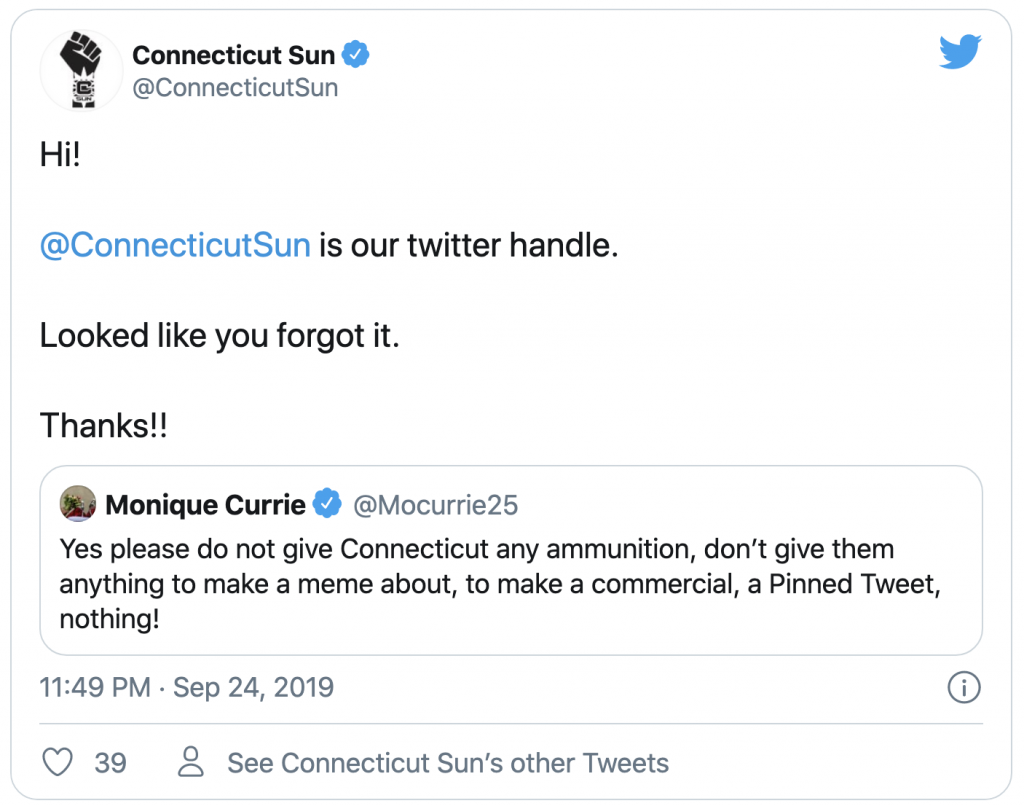
The WNBA’s Connecticut Sun are known for taking things personally online.
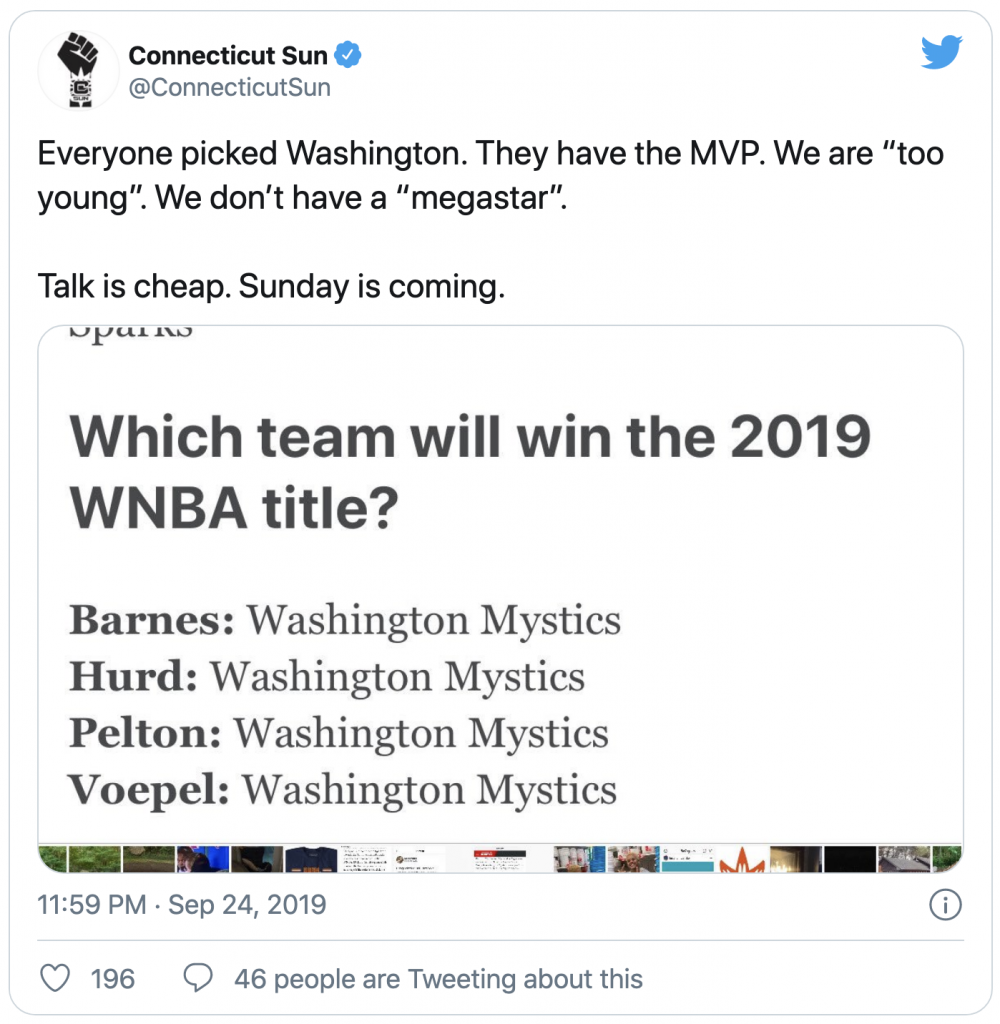
Taking Things Personally 2: The Art of Trash Talking - Pro Sports' Social Media Teams | The Social Group | Social Media Agency

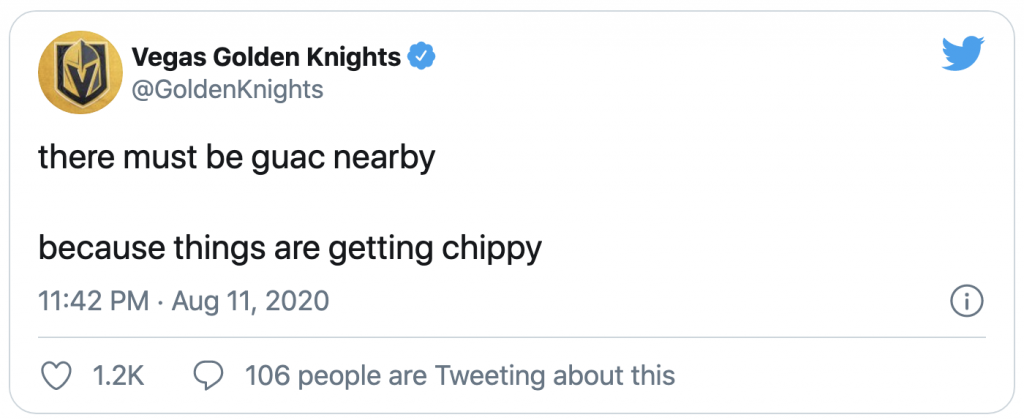
Even recently, as the Sacramento Kings started 2-0 in the new NBA season, they started feeling themselves on Twitter, only to be trolled after losing to the Phoenix Suns.

Being with the fans, digitally

Beefs aside, most of the teams — as the Washington Football Team’s social media managers said — are there for their fans.

They represent a region or a brand. Or they let one fan feel good that the people in their team’s front office feel as passionately about rivalries as they do.

It’s truly all about having fun, said the Golden Knights’ Girardi. Providing laughs and levity — especially during this time — is what is most important to the Golden Knights’ accounts right now.

“We like to really toe the line between being informative but being [a] friend. … We want people to be on our social channels and feel like we’re a friend that they’re watching the game with,” Girardi said.

“You know some people are watching the game alone, so let’s be kind of a friend and let’s interact with those people and let’s provide some laughs and some commentary.”

Instagram Marketing, Social Media Marketing

Instagram Reels: A Guide

August 13, 2020

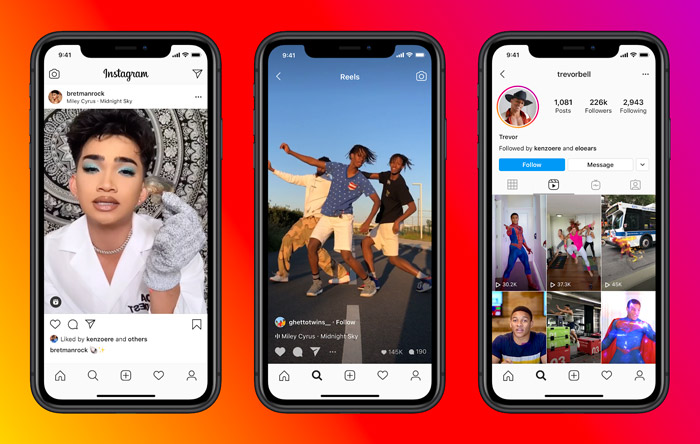
We’re excited to begin leveraging Instagram Reels: a new way for anyone — people, creators and businesses — to create and discover short, entertaining videos on Instagram.

With Reels, you can record and edit 15-second multi-clip videos with audio, effects and new creative tools. Reels allow people to express themselves while entertaining others, whether that’s trying out a new dance or spreading the message on something they care about.

Reels can be shared in Feed, and reels from public accounts are eligible to be discovered through a new space in Explore. Sharing to Reels in Explore means they may appear there and be visible to a larger audience. If your account is private, only your followers will be able to view your reels.

How it Works

how to use instagram reels


Creating Reels

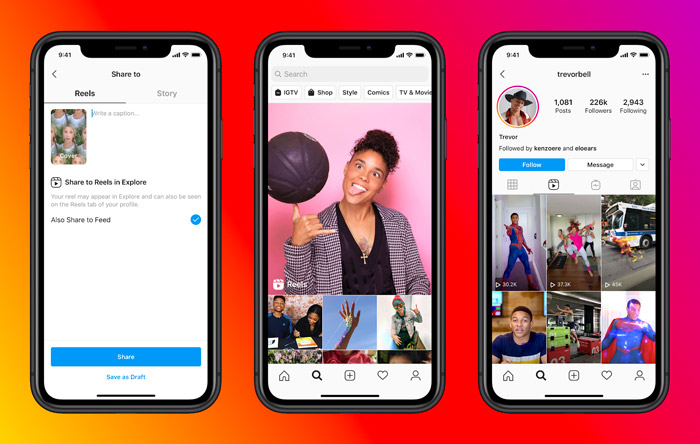
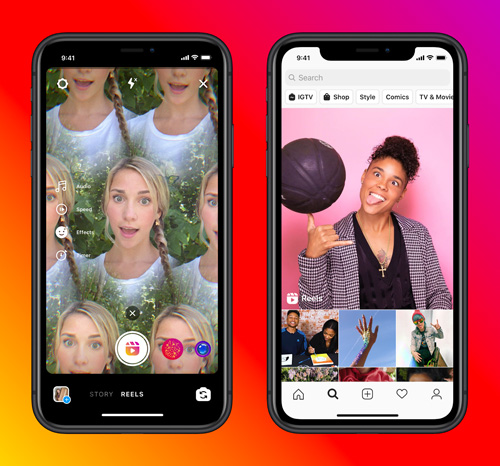
Select Reels at the bottom of the Instagram camera. You’ll see a variety of creative editing tools on the left side of your screen that you can use to create your reel, including:

  • Audio: Search for a song from the Instagram music library for your reel. While some businesses may not have access to the Instagram music library due to commercial music rights restrictions, people and businesses can also use their own original audio by simply recording a reel with it. When you share a reel with original audio, your audio will be attributed to you, and if you have a public account, people can create reels with your audio by selecting Use Audio from your reel. For example, if you record a reel with a voiceover product tutorial, others can tap Use Audio from your reel, and use your audio to make their own versions of the video.
  • AR Effects: Select one of the many effects in our effect gallery, created both by Instagram and creators all over the world, to record multiple clips with different effects. For example, use the Green Screen effect to superimpose your product in unexpected places that inspire your audience
  • Timer and Countdown: Set the timer to record any of your clips hands-free. Once you press record, you’ll see a 3-2-1 countdown.
  • Align: Line up objects from your previous clip before recording your next, which helps create seamless transitions for moments like outfit changes.
  • Speed: Choose to speed up or slow down part of the video or audio you selected.

Reels can be recorded in a series of clips (one at a time), all at once, or using video uploads from your gallery. Record the first clip by pressing and holding the capture button. You’ll see a progress indicator at the top of the screen as you record. Stop recording to end each clip.

instagram reels


If your account is public, you can share your reel to a dedicated space in Explore, where it has the chance to be seen and discovered by the wider Instagram community. You can also share your reel with your followers by posting it to your Feed. When you share reels featuring certain audio, hashtags, or effects, your reel may also appear on dedicated pages whenever someone clicks on that audio, hashtag, or effect. After you share your reel, it will live on a separate Reels tab on your profile, where people can find the reels you’ve shared. If you also share to your Feed, your reel will appear on your main profile grid. Whether you have a public or private account, you can share your reel to your Story. If you opt to do so, your reel will behave like a regular Story — it will not be shared to Reels in Explore, will not appear on your profile and will disappear after 24 hours.

instagram reels


Reels in Explore showcases the best of trending culture on Instagram. Discover an entertaining selection of reels made by anyone on Instagram, in a personalized vertical feed.

You’ll also see some Reels with a Featured label. Featured Reels are a selection of reels chosen by curators at Instagram to help Instagram users discover original content we hope will entertain or inspire them.

For more information on ways to amplify and elevate your brand’s Instagram, contact our Social Media Marketing team.

Digital Marketing Trends

Digital Marketing Trends for Automobile Brands

August 3, 2020

When studying digital marketing trends for automobile brands, it becomes apparent that the global shift to digital services has impacted the way consumers shop for cars. Whether it’s new model launches or details about an automobile they’re interested in purchasing, consumers want access to this information online and across devices. This global shift represents new challenges per emerging digital marketing trends for automobile brands. Online and mobile are streamlining people’s buying process across all industries and auto consumer expectations are no different. But despite cars being one of the most expensive things a person will ever buy, it’s not always an easy purchase process. Facebook IQ commissioned Accenture to survey auto consumers in nine markets to help understand their shifting needs, and uncovered three important trends impacting the industry today: digitally driven, first in lane and zero-friction experience.

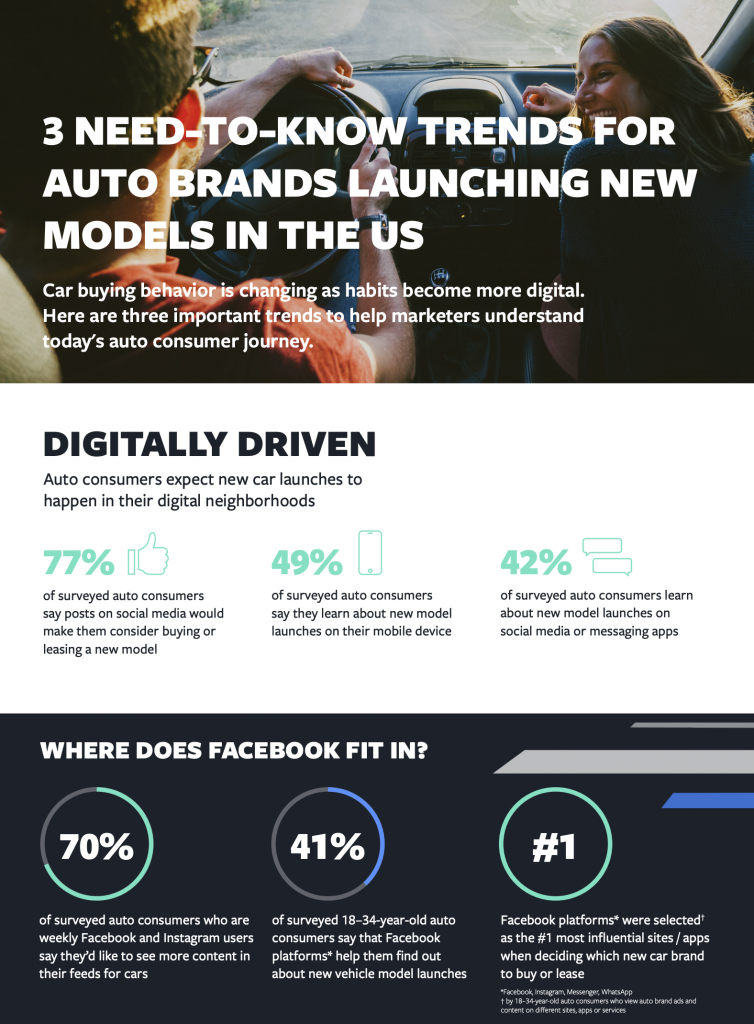
Today’s auto consumers are discovering automobile brands and models online, mainly through their digital communities on social channels. In fact, when looking at the US specifically, 77% of auto consumers in the US say posts on social media would make them consider buying or leasing a new model. People often already have an idea of the top brands they’re interested in and are spending less time looking for a new vehicle: 90% of Australian auto consumers surveyed spend under three months on research. And when it comes to checkout, consumers expect a friction-free shopping experience: 62% of auto consumers in Indonesia say they would complete their entire automobile purchase online if they could.

Although these trends hold true across all the markets surveyed, there are also some geographical nuances in car buying behavior. In terms of digital habits, car shoppers in India are more likely to learn about new model launches on a mobile device than on a computer, whereas their Western European counterparts are discovering mostly on desktop, which means that shoppers in these markets may favor brands that adapt their communications to these preferred devices.

When it comes to choosing a brand, auto consumers in Brazil are especially conscious of what a brand stands for, with good corporate reputation as their second top criteria when picking a brand. For auto consumers in the UK, this is less of a priority, and good customer service is a more important factor in their choice.

As for seamless experiences, the majority* of Canadian auto consumers would like to receive some form of personalized engagement on their smartphone from their auto brand, while this type of personalization is more likely to lead their Indonesian counterparts to buy or lease from a car brand. Despite these market variations, consumers across all countries have a growing expectation for friction-free digital auto shopping experiences catered to their unique life needs.


What it means for marketers

The Social Group - Check Mark

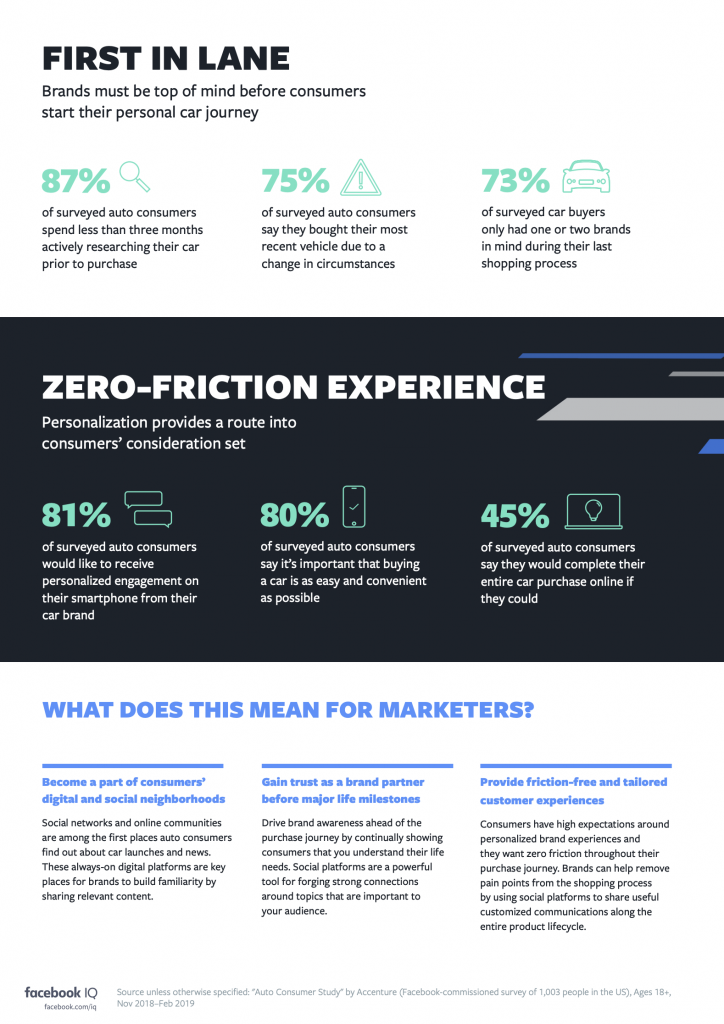
Become a part of consumers’ digital and social neighborhoods.

Social networks and online communities are among the first places auto consumers find out about car launches and news. These always-on digital platforms are key places for brands to build familiarity by sharing relevant content.

The Social Group - Check Mark

Gain trust as a brand partner before major life milestones.

Drive brand awareness ahead of the purchase journey by continually showing consumers that you understand their life needs. Social platforms are a powerful tool for forging strong connections around topics that are important to your audience.

The Social Group - Check Mark

Provide friction-free and tailored customer experiences.

Consumers have high expectations around personalized brand experiences and they want zero friction throughout their purchase journey. Brands can help remove pain points from the shopping process by using social platforms to share useful customized communications along the entire product lifecycle.

A car is one of the most significant yet complex investments a person will make, and it’s often closely tied to milestone events in their life. The car buying journey is unlike most others and new digital technologies continue to reshape how a consumer discovers and buys a car. Today’s brands need to respond to this shift by reinventing their product launches, driving engagement on digital and creating zero-friction experiences.

To help marketers understand how to cater to today’s auto consumers, Facebook IQ commissioned Accenture to survey 1,003 auto consumers in the US ages 18 and over. Combining this data with emerging behavioral shifts and insight from Matt Prior, editor-at-large of Autocar magazine, we uncovered three important trends impacting the industry today: digitally driven, first in lane and zero-friction experience.

Auto consumers expect new car launches to happen in their digital neighborhoods

Buying a car is among the biggest purchases someone will make in their lifetime, so how do today’s consumers make this important decision and choose among the many model and brand options available? With 65% of US auto consumers surveyed believing that a car is an expression of their personality and style, companies should consider how their car launches and marketing messages align with the personal brands that their customers are trying to build.

It’s not just their own tastes that lead consumers to select certain styles of cars—people have always been influenced by their communities when buying a vehicle, with half (50%) of auto consumers saying that recommendations from friends and family are influential when deciding which new brand to buy or lease. And today’s auto consumers are increasingly turning to their digital communities to see what their peers are purchasing. The vast majority of auto consumers surveyed* learn about new model launches on a mobile device or computer. And most auto consumers are consulting their social feeds for inspiration: 77% of auto consumers say posts on social media would make them consider buying or leasing a new model.

Why should car brands care about the new digital neighborhood?

  • 88% say they learn about new model launches on a mobile device or computer
  • 77% say posts on social media would make them consider buying or leasing a new model
  • 42% say they learn about new model launches on social media or messaging apps
  • 41% of 18–34-year-old auto consumers surveyed say that Facebook platforms help them find out about new vehicle model launches

Auto consumers aren’t just being influenced by their peers’ advice. They are also responding to online brand content during the research process. Some 42% of respondents say they learn about new model launches on social media or messaging apps, with over a third* saying they learn specifically from advertisements on these platforms. Given consumers’ increasingly digital shopping habits, it’s never been more important for car brands to build their presence in consumers’ digital neighborhoods to drive brand familiarity.

Automobile Brands must be top of mind before consumers start their personal car journey

The length of in-market time is shortening for car brands: Some 72% of US auto consumers surveyed said they spend less than one month actively researching their car prior to purchase or lease. And by the time they start shopping, 73% of respondents only consider one or two brands, meaning that they are not looking at all brands available, but have a small selection already on their radar. It is therefore becoming all the more important for car brands to drive familiarity ahead of launch.

So how can car companies make sure they are in a consumers’ consideration set before they start shopping? With three out of four* auto consumers surveyed saying they bought a new vehicle due to a change in circumstances, such as a job promotion, relocation or new addition to the family, personal milestones are huge catalysts for investing in a new car. So one way to be top of mind for consumers is to engage them ahead of their major life stages and take these into consideration when developing messaging strategies.

Personalization provides a route into consumers’ consideration set

Today’s consumers are accustomed to seamless and personalized product experiences across all aspects of their lives. In an independent survey, 83% of internet users worldwide said a quick and easy checkout was the most valued part of the shopping experience. And auto consumers are no different: Four out of five* US auto consumers surveyed say that it’s important that buying a car be as easy and convenient as possible.

Why do brands need to create friction-free buying experiences?

  • 80% say that it’s important that buying a car be as easy and convenient as possible
  • 45% say they would complete their entire car purchase online if they could
  • 40% say they’d like to book appointments directly with the dealership on their smartphone

Almost half* of those surveyed say they would complete their entire car purchase online if they could, and 40% say they’d like to book appointments directly with the dealership on their smartphone. Car brands looking to capture consumers’ long-term attention can stand out by providing the same friction-free digital experience that they expect elsewhere.

One way to do this is by providing personalized communication to help reduce the pain points common to the car buying process. A vast majority of auto consumers surveyed* say they’d like to receive personalized engagement on their smartphone from their car brand, and 45% of survey respondents feel that they would be more likely to buy or lease from a brand if it provided personalized engagements via their preferred communication method. Brands wishing to win loyalty in today’s digital landscape should consider moving toward customization that is more relevant to their consumers’ personal needs.


Digital Marketing Trends for Automobile Brands


Digital Marketing Trends for Automobile Brands for dealerships